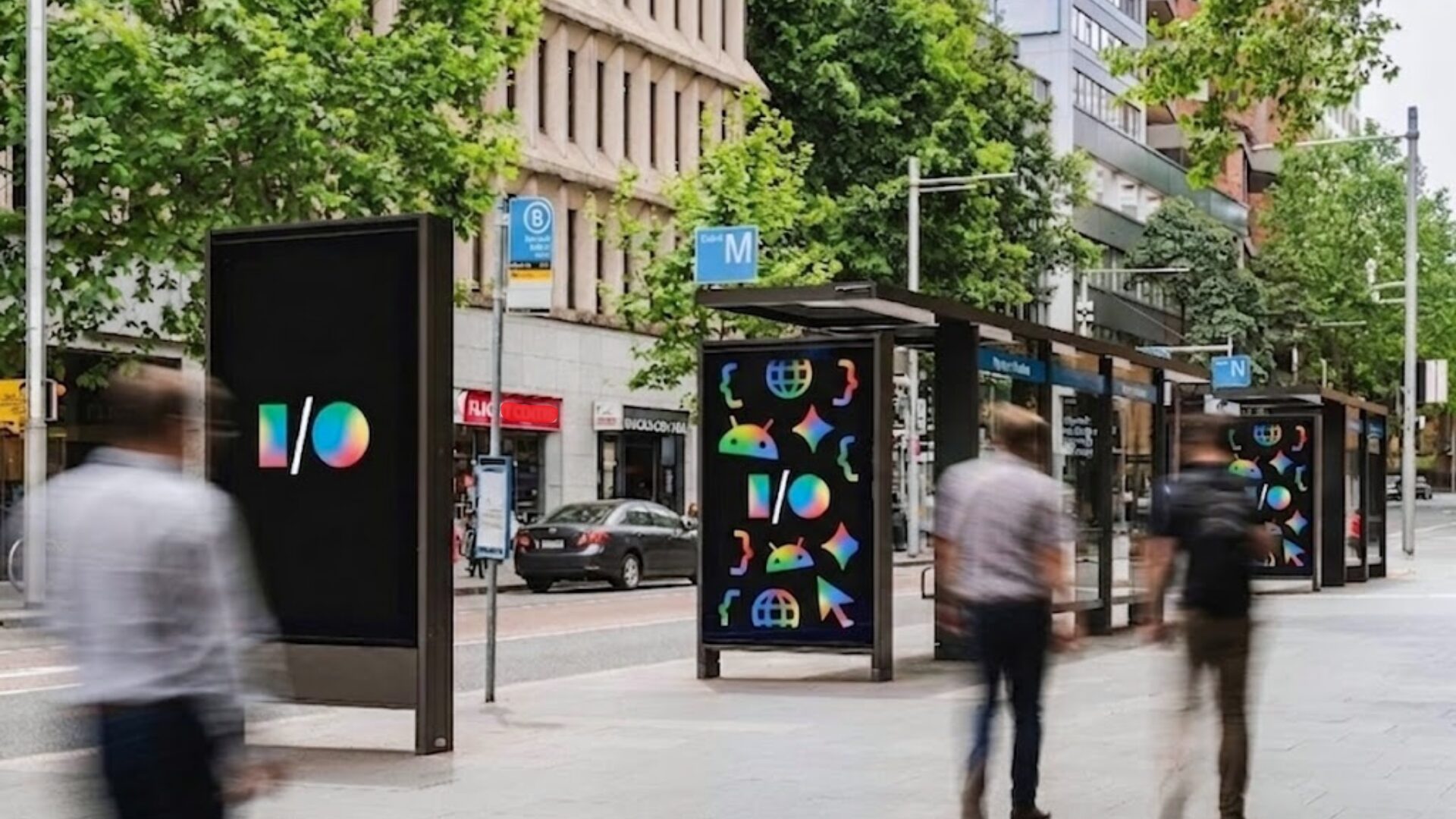
Google I/O made one thing clear: digital marketing is moving deeper into an AI-first search and discovery era.
For brands, this changes more than where they appear on Google. It changes how people search, how they compare options, how they consume information, and how quickly they expect answers. Search is becoming more conversational, content needs to be easier for AI to understand, and websites need to work harder once people arrive.
As Google CEO Sundar Pichai reinforced during Google I/O, AI is now a core layer across Google’s products — not a separate feature sitting on the side. When AI becomes part of how people search, plan, compare and create, brands need to rethink how they show up.
At Orange Digital, we are evolving our services to help businesses stay visible, useful and competitive in this new environment. Here is what that means in practice.
SEO is becoming AI visibility
Traditional SEO still matters — but it is no longer the full picture.
Businesses need to think beyond keyword rankings and start asking whether their brand is being understood, summarised and recommended by AI-powered search experiences like Google’s AI Overviews.
Google’s Head of Search, Liz Reid, has described AI in Search as a way to help people ask more complex questions and get more useful answers. That shift is exactly why SEO needs to move beyond surface-level keyword targeting.
Our focus is now on:
- Answer-led content that reflects real customer questions
- Stronger service and location page structures
- Clearer location and industry signals
- Schema markup and technical SEO foundations
- Content optimised for AI Overviews and conversational search
- Brand authority, trust signals and entity building
The goal is no longer just to rank. It is to become the answer.
Creative needs to build stronger brand recall
As AI makes information easier to compare, brand recognition becomes more valuable than ever.
If every business is competing inside shorter, AI-generated summaries, the brands that feel clear, credible and memorable will have a stronger advantage. Customers may move from discovery to comparison faster than ever before, which means creative has to work harder, earlier.
It needs to make a brand recognisable before the customer is ready to buy, not only when they are already in market.
That is why our creative approach focuses on:
- Distinctive brand positioning
- Campaign messaging that lands quickly and clearly
- Social-first content that reinforces authority and personality
- Creative that supports both paid performance and long-term brand recall
- Consistent messaging across search, social, email and web
Creative can no longer sit separately from performance. It needs to help people remember, trust and choose the brand.
Websites need to become smarter conversion ecosystems
AI may change how people find businesses, but websites still play a critical role in turning interest into action.
Once someone lands on a site, the experience needs to answer questions quickly, remove friction and guide the visitor towards the next step. With Google’s AI search updates, users are arriving with more context, clearer intent and higher expectations. They may have already compared providers, read AI summaries or asked follow-up questions before they ever click through to a website.
That means websites need to be ready for a more informed visitor.
We are placing greater focus on:
- Clearer customer journeys
- Stronger service and landing page strategy
- Better UX for different audience types
- Conversion-focused content
- CRM and automation integration
- Ongoing website performance optimisation
A website should not be treated as a one-off project. It should evolve alongside customer behaviour, search trends and campaign performance.
Paid media needs stronger alignment with search, creative and web
As Google’s AI ecosystem becomes more integrated, paid media cannot rely on isolated campaign setup alone.
Performance depends on how well the ad, the message, the landing page, the audience and the conversion pathway all work together. Google’s advertising updates continue to lean into automation, creative variation and AI-assisted campaign optimisation — but automation still needs direction. A smart bidding strategy cannot fix weak positioning, poor creative or a landing page that does not convert.
Our paid media approach is becoming more connected across:
- Campaign creative testing
- Landing page optimisation
- Search intent analysis
- Audience behaviour insights
- Conversion tracking and CRM visibility
- Brand and performance alignment
The strongest results come from joining the dots between media, creative, content and website experience.
Human strategy still matters
AI will continue to speed up marketing — but it will not replace strategic judgement.
Businesses still need human insight to understand customer hesitation, brand positioning, creative direction, competitive gaps and what will actually motivate action.
As Demis Hassabis, CEO of Google DeepMind, has noted, AI is best understood as a tool to accelerate human problem-solving. That is the right lens for marketing too. The opportunity is not to remove human thinking from the process, but to make better decisions with stronger tools.
At Orange Digital, our focus is not to chase every AI trend. It is to use technology in a way that strengthens strategy, improves visibility and creates better digital experiences for our clients.
The future of marketing is not just automation. It is smarter strategy, sharper creative and stronger human understanding behind every digital touchpoint.