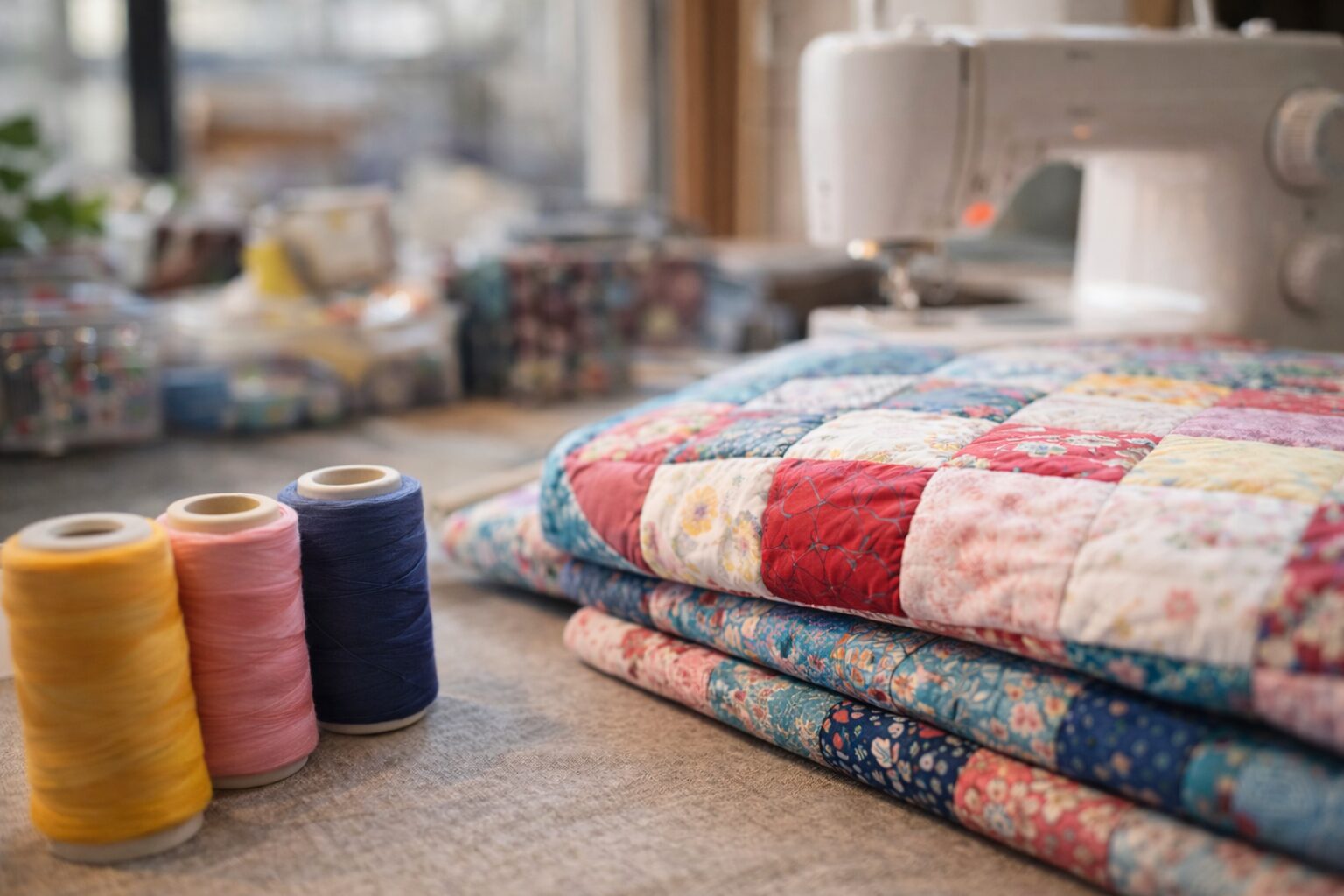
When the quilting e-commerce brand first partnered with Orange Digital, the business had all the ingredients of a successful online retailer. The products were high quality, the brand had cultivated a passionate quilting community, and repeat purchases were strong.
Despite this, paid media was failing to deliver meaningful growth. Advertising campaigns across Meta and Google Ads were inconsistent and difficult to scale. The brand had experimented with multiple campaign strategies, yet performance remained unpredictable and budgets could not be confidently increased.
The problem was not demand or product quality. Instead, the advertising ecosystem around the business was not properly structured to support scalable e-commerce growth.
Why Broken Conversion Tracking Across Meta and Google Ads Was Preventing Growth
The first step was conducting a full audit of the existing paid media environment. What quickly became clear was that the biggest issue was not creative or targeting, but measurement.
Conversion tracking across platforms was severely compromised. Meta was receiving only partial signals from the website, meaning its optimisation systems could not accurately understand which users were completing purchases. On the Google Ads side, the situation was even more challenging, with almost no reliable purchase data feeding into the account.
Without accurate purchase signals, both platforms struggled to optimise campaigns effectively. Modern advertising algorithms rely heavily on real conversion data to identify high-intent audiences and improve delivery. When those signals are incomplete, campaign performance becomes unstable and difficult to scale.
Rebuilding the Measurement Infrastructure With GA4, Meta Pixel, Conversion API and Shopify Integration
Before scaling any campaigns, the entire measurement framework had to be rebuilt to ensure reliable data across every platform.
The GA4 configuration was corrected to properly capture events across the full customer journey. Google Ads conversion tracking was rebuilt to record purchase value and key e-commerce events, enabling more accurate bidding strategies.
For Meta, both the Meta Pixel and Conversion API were implemented to ensure strong event tracking even within privacy-restricted environments. Server-side tracking was introduced to improve signal quality, while event deduplication ensured browser and server events were recorded correctly.
Because the brand operated on Shopify, the entire tracking environment was integrated directly with the e-commerce platform to ensure product views, add-to-cart actions and completed purchases were accurately transmitted to advertising platforms.
Once the measurement foundation was restored, the optimisation systems within both platforms could begin learning from reliable data.
Fixing Merchant Centre Product Feeds to Improve Google Shopping Visibility
The next focus area was the product feed powering Google Shopping campaigns.
A review of the Merchant Centre account revealed several data quality issues that were limiting the brand’s visibility within Google’s shopping ecosystem. Product titles were missing important search keywords, attributes were incomplete, and product categorisation did not always align with Google’s taxonomy for quilting materials and supplies.
We cleaned and optimised the entire product feed, rewriting titles to better match real search behaviour, improving attributes such as fabric type and quilting category, and restructuring product data to improve relevance within Google Shopping.
These improvements allowed Google’s AI systems to better understand the products and match them with users searching for quilting fabrics, tools and patterns.
Rebuilding Google Ads and Meta Accounts With a Clear Prospecting, Retargeting and Customer Funnel
With measurement and feed quality corrected, both advertising accounts were rebuilt from the ground up.
Campaign structures were simplified and organised around a clear marketing funnel designed for e-commerce growth. Prospecting campaigns were created to reach new quilting audiences who had not yet interacted with the brand. Retargeting campaigns focused on website visitors and product viewers who had demonstrated purchase intent. Customer campaigns targeted existing buyers with upsell and cross-sell product recommendations.
This structure ensured that each campaign had a clear role within the customer journey while allowing platform algorithms to operate more efficiently.
Leveraging Meta AI With Advantage+ Shopping Campaigns and Andromeda Ranking Optimisation
On Meta, the strategy focused on leveraging the platform’s latest AI capabilities.
Advantage+ Shopping campaigns were deployed to enable Meta’s automation systems to dynamically optimise delivery across audiences and placements. Rather than relying heavily on narrow interest targeting, broad audience strategies were used to give the platform’s machine learning systems access to larger datasets.
Meta’s Andromeda ranking architecture evaluates thousands of behavioural signals to determine which ads users are most likely to engage with. By feeding the system strong purchase signals and product catalogue data, campaigns were able to identify and prioritise high-value quilting audiences.
Dynamic catalogue ads were also introduced to automatically showcase relevant products based on user behaviour and browsing patterns.
Relaunching Google Ads With Performance Max, Enhanced Conversions and AI-Driven Bidding
Google Ads campaigns were relaunched using modern automation tools designed for e-commerce performance.
Performance Max campaigns were implemented to allow Google’s AI systems to optimise delivery across Search, Shopping, Display, YouTube and Discover placements. Enhanced conversions strengthened the reliability of purchase data, while first-party audience signals helped inform Google’s predictive bidding models.
Because the product feed had already been optimised, Google’s machine learning systems could effectively match products with high-intent search queries related to quilting fabrics, tools and project kits.
This combination of strong product data and accurate conversion signals allowed the campaigns to scale efficiently.
Building a Creative Testing Engine With Quilting Tutorials, Product Demonstrations and UGC-Style Ads
To support campaign optimisation, a structured creative testing framework was introduced.
Rather than relying on a small number of static product images, the brand began producing a wide variety of creative assets designed specifically for quilting audiences. These included quilting tutorial videos, product demonstrations highlighting fabric quality, seasonal quilt inspiration content and user-generated style creatives that reflected real customer experiences.
This steady stream of creative variations provided strong engagement signals to both Meta and Google Ads algorithms, helping them quickly identify which messages resonated with potential buyers.
Using AI-Driven Automation, Predictive Bidding and Intent Modelling to Scale Profitably
Once the measurement infrastructure, campaign structure and creative pipeline were fully optimised, the focus shifted to scaling performance using modern AI-driven automation.
Both Meta and Google Ads rely heavily on predictive models to identify users most likely to convert. With reliable purchase data now flowing through the system, both platforms were able to improve targeting accuracy significantly.
Predictive bidding strategies, dynamic creative assembly and intent modelling allowed campaigns to automatically adapt based on real-time performance signals. As both platforms began identifying similar high-value customer segments, cross-platform learning signals further reinforced campaign performance.
This automation environment enabled the brand to increase ad spend while maintaining strong profitability.
From Inconsistent Paid Media to a Reliable Growth Channel Delivering 20x ROAS
With a rebuilt measurement infrastructure, optimised product feeds, AI-driven campaign structures and continuous creative testing, paid media was transformed into a reliable growth engine for the quilting brand.
Campaign performance improved dramatically, achieving a 20x return on ad spend across both Meta and Google Ads. Advertising budgets could now be scaled confidently while maintaining profitable customer acquisition.
Paid media evolved from an unpredictable expense into a dependable growth channel, consistently generating new customers while continuing to serve the loyal quilting community that had already made the brand successful.