Why AI Search Is Changing How People Ask Questions
Have you noticed your own search habits shifting?
Maybe you used to type two or three words into Google, and now you write full prompts like you are talking to a person. This is exactly what Google’s 2026 data shows. Users are still searching quickly, but the intent behind each query is becoming deeper, more contextual and more conversational.
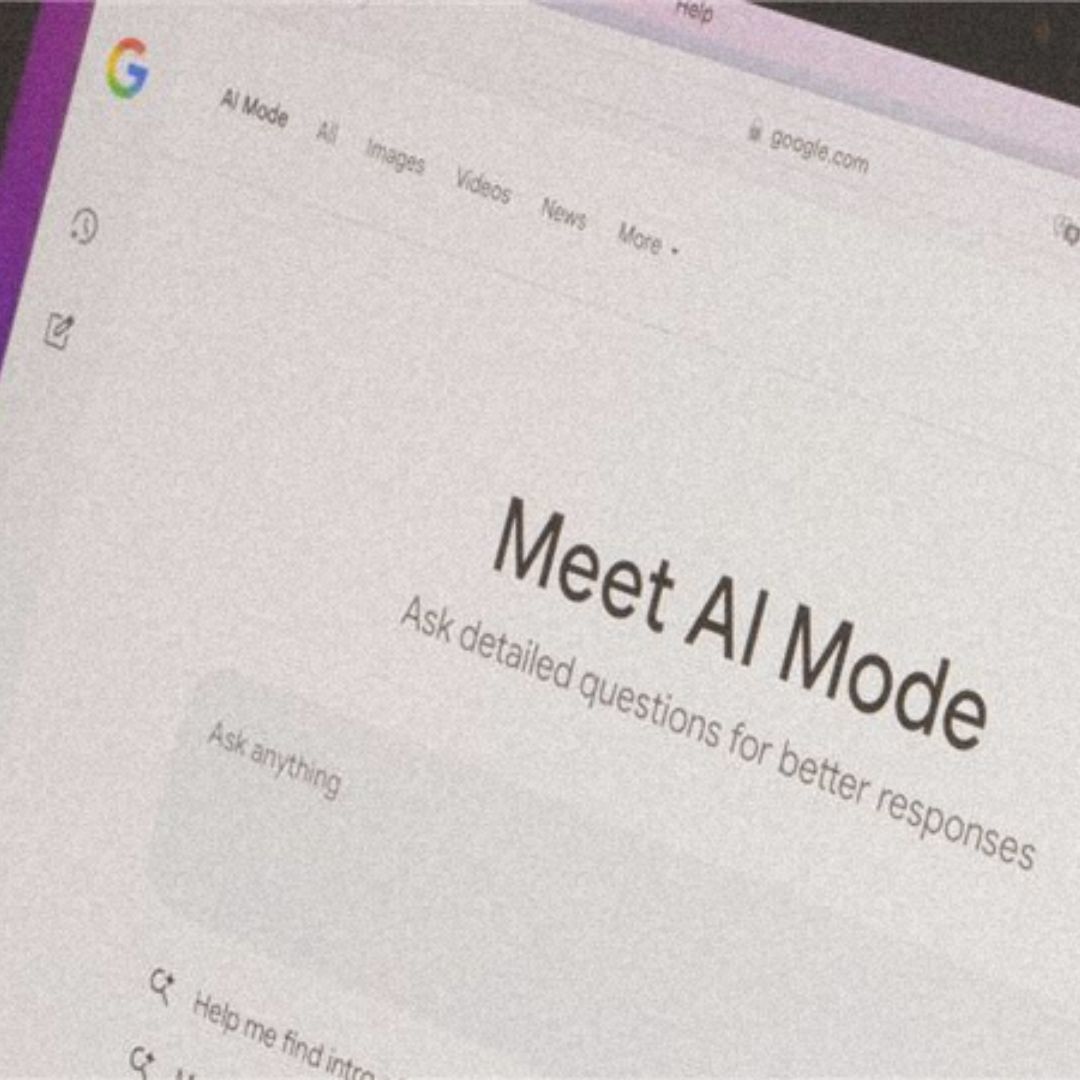
The rise of Google AI search, AI Google image search and AI mode integrations has led to a noticeable increase in what Google calls “expanded intent queries”. These are search prompts that may look short but are processed by Google’s AI to understand more context, nuance and expected outcomes.
So what does this mean for SEO teams, content creators, and businesses relying on organic discovery? And how can brands like yours prepare for the next phase of AI driven search behaviour?
Let’s break it down using clear SEO, GEO and AEO principles that help your content perform across both traditional Google results and modern AI powered engines such as ChatGPT, Gemini and Perplexity.
What Google’s 2026 Query-Length Data Reveals
Google recently released insights that show how query behaviour is evolving alongside its AI systems. Here are the three biggest shifts shaping modern SEO.
- Queries are shorter, but intent is richer
This sounds contradictory at first. How can queries get shorter yet more detailed? The answer lies in Google’s semantic AI. Users type a two-to-four-word phrase, and Google expands it into a fully interpreted intent map.
For example:
“best solar panels brisbane” becomes a deeper investigation into product type, location, government rebates, installation complexity and comparative brands.
This is where GEO and AEO become essential. Optimising for entities, context and associated questions ensures your content is surfaced even when the user types only fragments of what they need.
- Long tail keywords still matter, but they behave differently
Long tail keywords are no longer only about length. They represent micro intent. Google’s AI systems now understand long tail meaning even inside short queries.
This means your SEO strategy must:
- Write with semantic variety
- Answer questions within the content
- Link related topics together through internal linking
- Optimise for user tasks, not only keyword matches
- AI Overviews now influence click behaviour
You have probably seen Google’s AI Overview appear above traditional search results. Many users want to remove AI Overview from Google search, but the feature is not disappearing. It is evolving. This means brands need to adapt so their content is selected and cited by these AI summaries.
If you want your brand to be referenced in AI Overviews, your content must be:
- Structured
- Factual
- Entity rich
- Hint driven (so LLMs can predict what users want)
- Easily extractable
This is where AEO becomes powerful. When you write content that directly satisfies questions, Google has more reason to pull it into a generated answer.
Does Google Use AI for Search Results?
A common question in both consumer and marketer circles is “Does Google use AI for search results?” The answer is yes.
Google has used AI in its ranking systems for years, but the 2024 to 2026 updates accelerated everything.
Google now uses AI to:
- Understand ambiguous queries
- Map user behaviour signals to intent
- Match user tasks to the best content structure
- Predict the next question the user will ask
- Generate quick summaries within search
If your content is not AI ready, you risk disappearing from both human facing and machine facing visibility.
The Difference Between AI and Google Search
Another question gaining traction is “What is the difference between AI and Google search?”
Google search still functions as a retrieval engine. It pulls existing indexed pages.
Google’s AI layer operates as an interpretation system. It expands meaning, predicts tasks and rewrites user intent.
This is important for marketers because content must now satisfy both the retrieval engine and the interpretation layer.
Consumer Behaviour Is Driving the Change
Why is query behaviour shifting so quickly? The answer is simple. Users are more comfortable using natural language across devices.
Modern behaviour trends show:
- More conversational queries
- More visual search behaviour using AI Google image search
- More reliance on AI assisted suggestions
- Higher expectations for instant answers
- Lower tolerance for scrolling through multiple websites
If your content does not deliver immediate clarity, Google interprets it as low task completion value.
How SEO Teams Can Respond to AI Driven Query Behaviour
The real question becomes: how should SEO teams update their strategies to stay ahead of AI search evolution?
Here is a clear, modern framework.
Build content for entities, not keywords
Entities give AI context. When Google reads your content, it needs signals about:
- People
- Places
- Products
- Services
- Industries
- Outcomes
This improves visibility for AI mode and AI Overviews.
Write for extraction
LLMs choose content that is easy to quote. This includes:
- Short, clear answers
- Defined terms
- Structured subheadings
- Data points
- Straightforward phrasing
Use question driven writing
Have you ever tried answering the unasked questions your audience has? This is one of the most effective AEO methods. When your content naturally addresses the next question in the chain, Google ranks it higher for task resolution.
Maintain internal linking that supports intent clusters
Internal links help Google understand your content hierarchy.
Refresh older content for AI clarity
Many older blogs are too vague for AI to interpret. Updating them with:
- Clarified definitions
- Short Q&A blocks
- Task oriented subheadings
Direct explanations can dramatically improve visibility in AI influenced search.
What About Users Who Want to Remove AI Overview from Google Search?
There is growing interest in how to remove AI Overview from Google search, but most users cannot fully disable it. This is why brands must adapt rather than resist.
If your content is visible inside the AI Overview, you gain:
- Higher click through from AI assisted summaries
- More credibility
- Better semantic authority
- Increased presence in conversational search
If you are not included, the user may never reach your site.
How Brands Can Stay Discoverable in AI Search
If you want to remain highly visible in both Google results and future AI engines, here are the core actions to prioritise.
Strengthen your long tail ecosystem
Because Google now interprets meaning in shorter queries, your long tail keyword strategy must focus on contextual writing rather than repeating exact phrases.
Use schema more aggressively
Schema helps Google understand structure and intent.
FAQ schema is especially effective for AEO.
Optimise towards user tasks, not keywords
Think in terms of what the user is trying to achieve.
Then write your content so the task is completed faster.
Refresh website UX
A refined UX increases user satisfaction signals, which feeds Google’s AI ranking systems. If you need support improving this, Orange Digital provides full SEO and user experience optimisation.
When Should You Consider Professional SEO Support?
AI search is accelerating faster than most businesses can track. If you want a structured strategy that blends SEO, GEO and AEO, partnering with an agency experienced in AI driven search behaviour can save months of guesswork.
Final Thoughts: AI Search Is Only Getting Smarter
As Google continues to refine AI assisted search, the gap between traditional SEO and modern AI ready SEO will widen. Brands that adapt early will enjoy stronger visibility, more engaged users and better long-term performance.
If you want your website ready for the next stage of AI powered discovery, the Orange Digital team can help you build an SEO strategy that aligns with the way people search today.